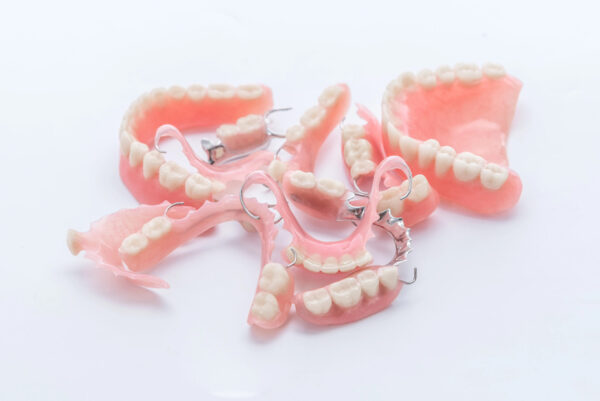

While this guide focuses on nursing home and homebound patients, the general process is similar for patients seen in our office.
When a nursing home resident needs a new denture—whether due to loss, breakage, or poor fit—it’s natural for caregivers and families to have questions. How many appointments are needed? Will the resident be without teeth? What does the process actually look like?
Denture replacement does not need to be overwhelming. With a thoughtful, step-by-step approach, care can be delivered in a way that prioritizes comfort, function, and continuity—especially for elderly or medically complex patients.
Below is an overview of what caregivers and families can expect during the denture replacement process.
Step 1: Initial Evaluation and Planning
Every denture process begins with a comprehensive evaluation. During this visit, we focus on understanding the whole picture, not just the denture itself.
This appointment includes:
- Evaluation of the oral tissues and gum health
- Discussion of comfort, function, and expectations
- Review of what the resident liked or disliked about previous dentures
- Assessment of medical or cognitive factors that may affect treatment
This conversation helps guide decisions so the final denture supports both comfort and daily function.
If you’re unsure when evaluation is needed, this may be helpful: How Often Should Dentures Be Checked for Nursing Home Residents?
Step 2: If the Current Denture Is Available
When a resident still has their denture—even if it fits poorly—we often use it as a guide rather than starting from scratch.
Using the Existing Denture as a Reference
During this visit:
- Measurements are taken to evaluate the bite and jaw relationship
- The existing denture is assessed against what we want the final denture to look and feel like
- An impression is made inside the current denture to improve its fit
This approach helps preserve familiarity while improving comfort.
Digital Scanning
The denture and records are digitally scanned using an intraoral scanner. After scanning:
- The denture is cleaned
- The resident keeps wearing their denture
- A soft liner may be recommended to improve comfort while the next steps are completed
For many residents, this means no time without teeth.
Step 3: Adjustments or Try-In (Depending on Complexity)
If Only Minor Adjustments Are Needed
When changes are minimal, the next appointment may involve delivery of the final denture with any necessary refinements.
If Significant Changes Are Needed
If bite position, fit, or appearance require more adjustment, we may create a temporary trial denture.
- The resident is able to wear this denture for a short period
- Comfort, function, and tolerance are evaluated
- Feedback guides final fabrication
This step helps reduce surprises and improve long-term success.
Step 4: If the Denture Is Not Available
When a resident no longer has a denture, the process follows a slightly different—but still structured—path.
Appointment 1: Initial Scan and Evaluation
- Oral tissues are evaluated
- Digital scans are taken to capture anatomy
- Treatment goals are discussed with caregivers and family
Appointment 2: Records and Impressions
- The lab provides a wax model
- Bite records and impressions are made
- These records guide the denture design
Appointment 3: Trial Denture Delivery
- A trial denture is placed and worn for a short period
- Comfort, function, and fit are evaluated
The trial denture allows refinement before the permanent denture is fabricated.
Step 5: Final Denture Delivery and Follow-Up
Once the permanent denture is ready:
- Delivery is completed on site whenever possible
- Adjustments are made to optimize comfort
- Follow-up is scheduled to address any pressure points or concerns
Follow-up care is an important part of ensuring the denture continues to support eating, speaking, and daily comfort.
Learn more about ongoing care: Why Ill-Fitting Dentures Are a Serious Health Risk for Seniors
Thoughtful, Patient-Centered Process
Denture replacement is not about rushing to a result—it’s about restoring function in a way that respects the patient’s comfort, routine, and dignity. By using existing dentures when possible and incorporating trial steps when needed, the process is designed to be predictable and supportive.
How to Request a Denture Evaluation
Caregivers, nursing home staff, social workers, and family members can submit a secure referral for denture evaluation and replacement.
Refer a Nursing Home Resident for Denture Care
On-site evaluations available – no transport required.
Every resident’s needs are different. A step-by-step denture process allows care to be tailored thoughtfully—supporting comfort, familiarity, and quality of life throughout each stage.
About the Author